
Finishing Is a Different Kind of Courage
The Unfinished Painting
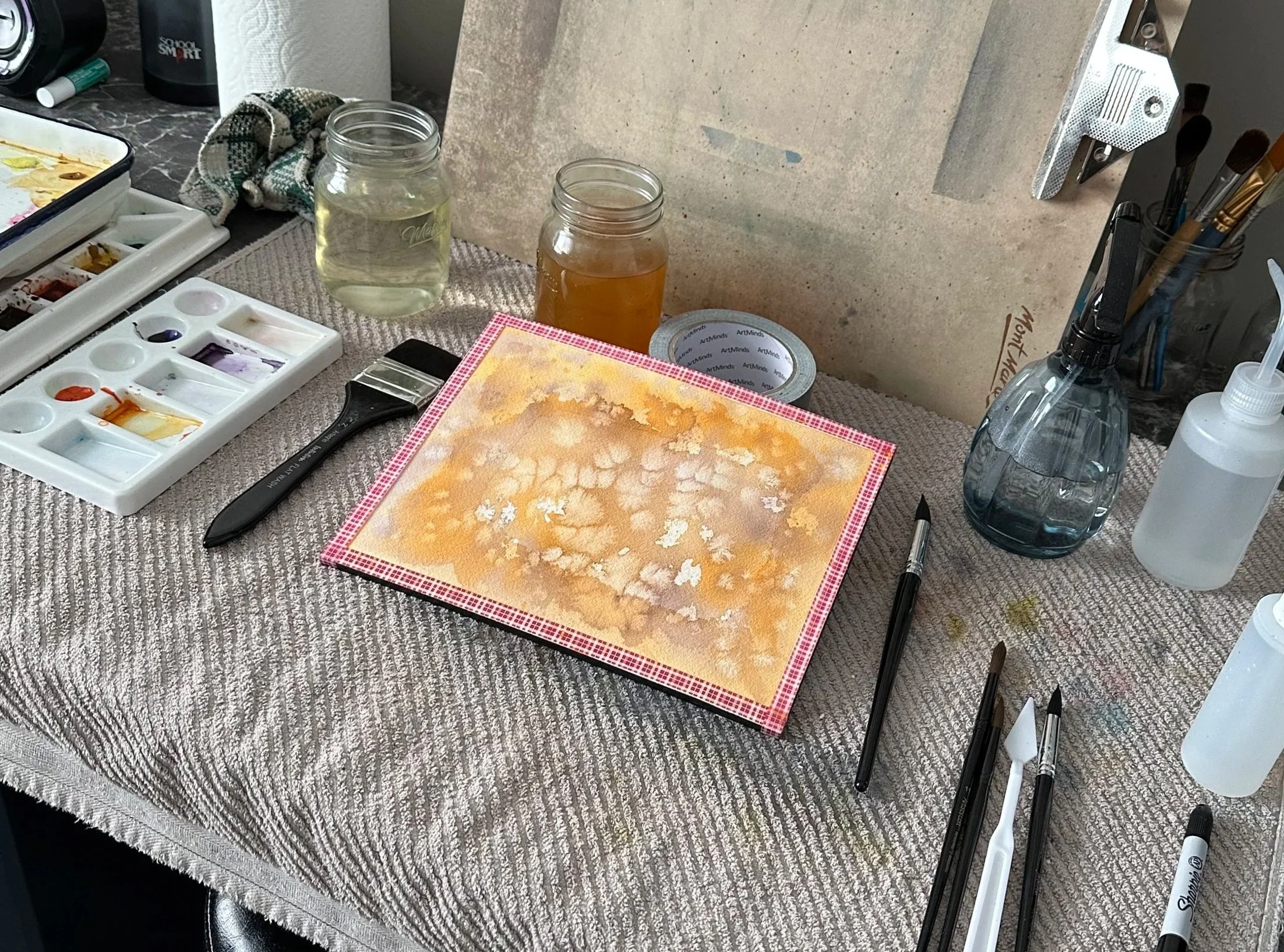
Every day for the past two weeks, I’ve been glancing over at my unfinished painting - a part of my. River Rock Series. It’s close enough to feel like it should be easy to finish, and unfinished enough to nag at me every time I walk by. It’s also a perfect example of my favorite pattern: I start things with real enthusiasm, and then I drift before the ending arrives.
Beginnings Are Friendly
Beginnings are friendly. They’re clean. They inspire possibility and when something is new, it hasn’t asked you to be consistent yet. There aren’t any demanding decisions, and it hasn’t revealed the parts that are awkward or flat or harder than you expected. Starting lets you live in the glow of “this could be great.”
The Middle Is Where Things Stall
Then comes the middle, and the middle is where a lot of things stall for me. The middle is when you have to return without the spark. When you have to work with what’s actually there. When the project stops being a dream and becomes a real thing with limits, flaws, and unanswered questions — in other words, it just plain looks bad.
Why Finishing Feels Risky
Finishing asks for something different than starting. Starting lives in potential; finishing lives in reality. Reality has edges. It’s imperfect. It can be seen. That’s not a reason to avoid it, but it does explain why so many of us get stuck right before the end.
If I don’t finish, the painting can still become anything in my head. If I finish, it becomes this one specific painting, with this one specific outcome. There’s relief in completion, but at the same time there’s also exposure.
When Not-Finishing Becomes a Story
For a long time, I treated my not-finishing habit like a personality defect. I told myself I was inconsistent, flaky, undisciplined, or just plain not qualified or good enough. I tried to fix it by getting stricter, getting organized, getting “better.” None of that worked for long, because it was built on annoyance with myself. Annoyance creates pressure, and pressure makes me want to disappear.
Not Laziness, Sometimes Protection
What helped was looking at the habit as information instead of evidence. Sometimes I don’t finish because I’m tired and pretending I’m not. Sometimes I don’t finish because I’ve made the project mean too much, so the ending feels loaded. Sometimes I don’t finish because “done” implies an audience, and I’m not always in the mood to be perceived. Sometimes I don’t finish because if it’s over, I have to decide what comes next.
In other words, it’s not always laziness. Sometimes it’s self-protection. And self-protection can keep you safe, but it can also freeze you in place.
One Small Step Toward Done
I’m not interested in turning this into a clinical self-improvement project. I don’t want ten steps. I don’t want a color-coded system that works until life gets complicated. I want one thing I can actually do when I’m standing in front of the unfinished painting, bargaining with myself, and here it is: take one small step toward done.
It has to be a finishing step, not a restart. Not a “re-vision.” Not a new notebook, a better plan, or a fresh burst of inspiration. A step that closes something, even slightly.
With the painting, a finishing step might be mixing the exact color I’ve been avoiding and putting it on the canvas. It might be committing to the final background layer, even if it’s not perfect. It might be signing it, which is its own kind of courage.
In other projects, a finishing step looks like sending the email, choosing the photo, writing the last paragraph, packaging the thing, booking the appointment, clicking publish. It’s usually small, and it’s usually a little uncomfortable, because it ends the fantasy phase.
Small Is the Doorway
That’s why the step has to be small. Big finishing pushes trigger the part of us that wants to escape. The nervous system hears “finish the whole thing” and responds with resistance and noise. One small step is easier to agree to. It’s a narrow door you can walk through without needing a new personality.
The surprising part is what happens after you take the step. Even if it’s tiny, it changes your relationship with the work. You’re no longer standing outside the project, staring at it like it’s a judgment waiting to happen. You’re in it. You’re moving. You’re proving to yourself that progress is possible without force.
The Step Tells the Truth
It also helps you tell the truth about what’s going on. Sometimes I avoid finishing because I’m genuinely done with the idea. Sometimes it’s not mine anymore, or not for now, or not worth the energy it’s asking for. But I’ve noticed that a lot of my “I’m over it” is just avoidance in a nicer outfit.
A small finishing step clarifies things quickly. If the step brings relief, the project probably matters and I’m dodging the vulnerability of the last stretch. If the step feels like dragging myself through gravel, that’s information too.
Either way, you stop living in the vague purgatory of almost. You get contact with reality, and reality is workable.
Finishers Practice Return
I’m also starting to think that finishers aren’t people who never get distracted. Finishers are people who practice return. They return after the novelty fades. They return when they’d rather start something new. They return when perfectionism tries to convince them the work isn’t ready yet. They return in small ways, consistently enough that “done” becomes normal.
So if you’re someone who starts a lot and finishes less, you don’t need to shame yourself into discipline. Pick one thing that would feel good to complete, then choose the smallest finishing step you can take today. Do only that. Let it be imperfect. Let it count.
And on that note, stay tuned for my finished painting. This unfinished one is what started me on this topic.
A Question for You
What’s something you’ve started that you’d genuinely like to finish?
If you want, share the smallest “finishing step” you could take next. I’d love to hear what you’re returning to.
If you’d like a quiet place to practice small returns, my Quiet Living journal is available in my shop.